How to Gently Snap Out of ADHD Hyperfocus Time Sinks
Published on September 12, 2026
Minimum Viable Action (MVA)
Transitioning out of hyperfocus requires somatic resets and simple physical steps, not harsh self-criticism.
Understanding the Unplanned Rabbit Hole
Have you ever started a quick search and suddenly lost three hours? You intended to look up one detail. Instead, you read dozens of articles or organized your files.
This deep focus state is common with ADHD. When a task feels interesting, your brain locks on. You tune out sounds, hunger, and time itself.
This is not a failure of willpower. Your brain simply runs on a different focus system. Recognizing this mismatch is the first step toward easier transitions.
Why You Get Stuck in Deep Dives

Unplanned rabbit holes often start with low-friction tasks. Polishing a spreadsheet or customizing your calendar feels productive in the moment. The brain receives a steady stream of interest and novelty.
During these moments, your internal clock turns off. Researchers call this time blindness. An hour can pass, but it feels like ten minutes.
When reality interrupts, the sudden shift can feel jarring. You might feel panicked or disappointed in yourself. Modern schedules demand linear focus, which does not match how your brain operates.
The goal is not to stop hyperfocus entirely. The goal is to build safer ramps to pull out when needed.
Gentle Ways to Step Out of Hyperfocus

Telling yourself to just stop working rarely works. Your thinking brain is already busy with the absorbing task. Instead, break the loop using physical and sensory signals.
Start with a simple 3-step physical reset:
- Change your posture: Push back from your desk, relax your shoulders, and loosen your jaw.
- Expand your sight: Look out a window or at a far wall for fifteen seconds.
- Cool down: Run cold water over your wrists at the sink to ground your body.
Next, use a Minimum Viable Action. Choose the smallest physical step toward your true priority. If you need to write a report, just open the blank document.
Building External Supports for Smooth Transitions
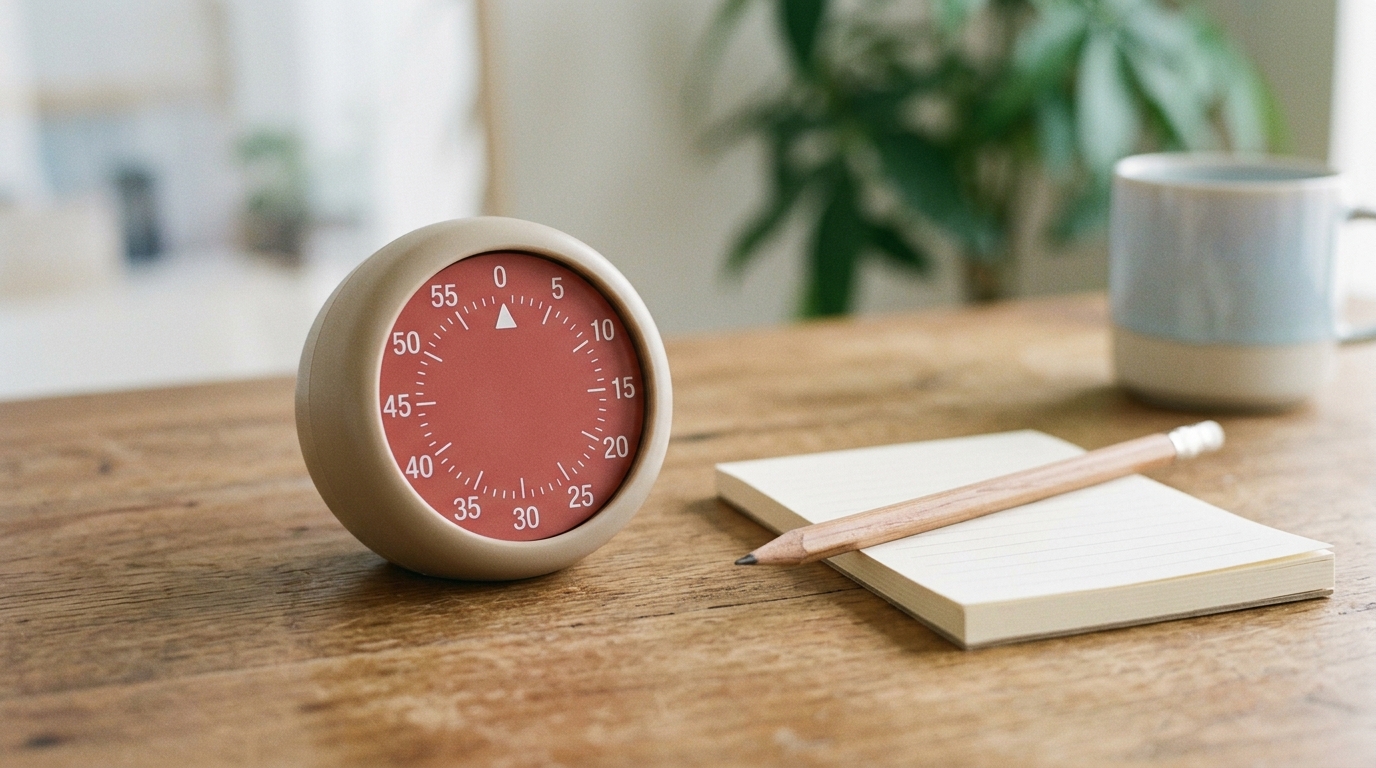
Internal clocks are unreliable during deep focus. Relying on external visual tools helps protect your time without causing stress.
Place a physical visual timer on your desk within sight. Seeing a colored disk shrink gives passive time feedback. This works better than hidden phone alarms.
Keep an analog Parked Ideas notepad next to your keyboard. When an interesting thought pops up, write it down immediately. Tell yourself you can explore it during free time later.
If you realize you lost time, speak to yourself gently. Acknowledge that your brain locked onto an engaging topic. Take a deep breath and begin your physical reset without self-blame.
Moving Forward with Compassion and Strategy
Hyperfocus is a natural feature of your brain. It is not a flaw you need to cure. You do not lack discipline.
By setting up supportive environments, you make transitions easier. Visual tools, physical resets, and small actions give your brain clear paths out of rabbit holes.
Be patient with yourself as you build these habits. Every gentle reset strengthens your relationship with your focus.
Build a productivity system around your real capacity
If these strategies resonated with you, our comprehensive guide will give you a full toolkit to start, focus, reset, and recover on low-capacity days.