Playlist Timers: How to Sense Time Gently Without Harsh Alarms
Published on August 22, 2026
Minimum Viable Action (MVA)
Replace jarring digital alarms with short, structured playlists to build a gentle, auditory clock for your tasks.
Why Digital Alarms Fail Your Brain
Standard timers often feel like a shock. A loud alarm rings, triggering sudden stress.
This reaction is not a failure of willpower. Your environment is simply missing gentle cues.
Adults with ADHD often experience time blindness. Visual clocks are easy to ignore during hyperfocus.
Music can offer a calmer way to feel time pass. It creates a soft background grid for your brain.
Letting Track Changes Count the Minutes

Songs have natural beginnings and endings. Each track change acts as a gentle marker in memory.
When you listen to short songs, your mind registers distinct milestones. You sense time without constantly checking a clock.
A three-song playlist creates a built-in container:
- Track one helps you start.
- Track two supports your focus.
- Track three signals the end is near.
This gives your nervous system time to wrap up work naturally. You avoid sudden interruptions.
Selecting the Right Musical Tempo
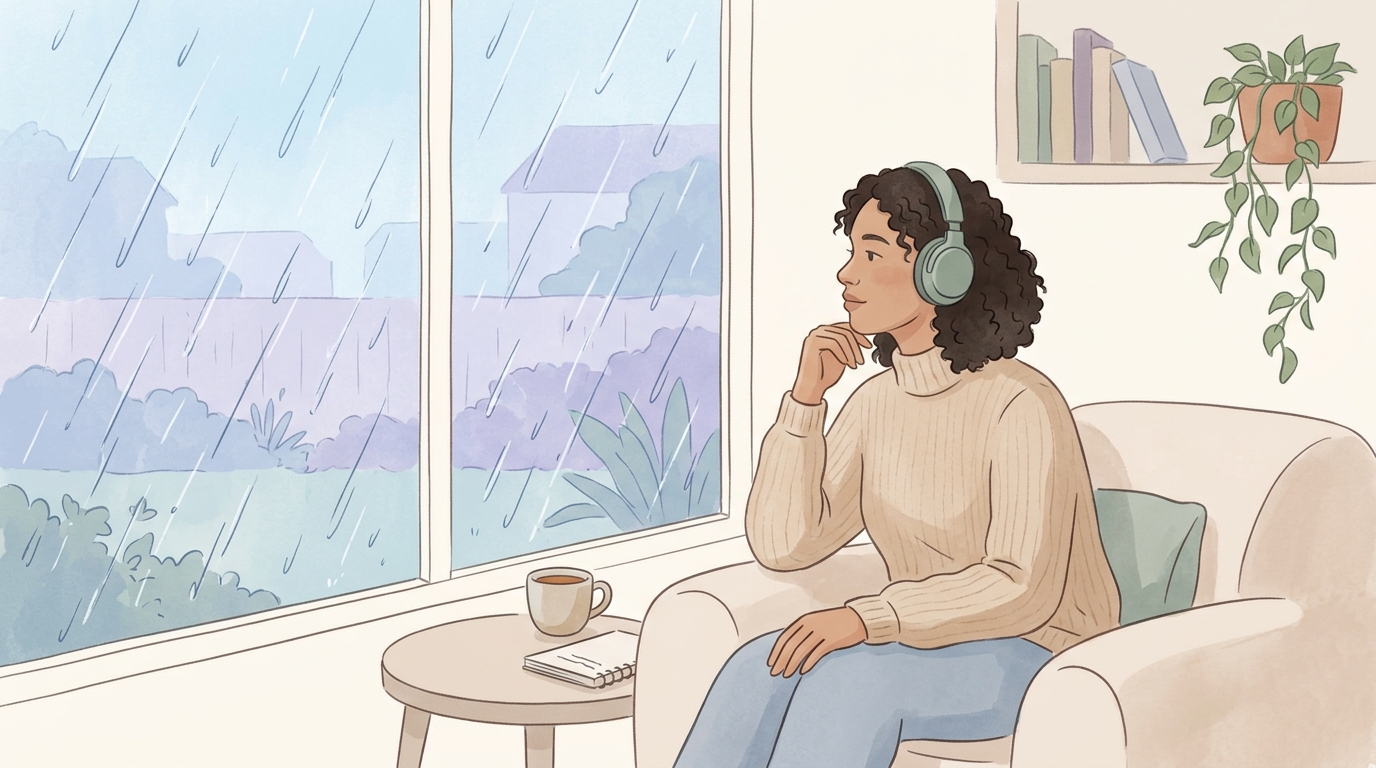
Not all music affects focus in the same way. Fast, chaotic songs can make your brain feel rushed.
Aim for steady tracks with a moderate tempo. Songs around 90 to 120 beats per minute work best.
Choose instrumental tracks that you truly enjoy. Songs with words can crowd your working memory while reading or writing.
Pleasant music makes boring tasks feel easier. It reduces friction without causing sensory overload.
Designing a Gentle Transition Runway

Switching away from a task can feel very difficult. Sudden stops create severe cognitive resistance.
You can build a gentle landing strip into your playlist. Make your final song slow and ambient.
When that quiet song starts, you get a clear cue. You know you have three minutes to wrap up.
Turn off autoplay so the music stops softly. The resulting silence becomes your natural cue to rest.
Building Your Scaffolding
You do not need harsh alarms to stay on track. You just need a system that fits your brain.
Try building a short three-song playlist today. Use it for a single quick task like washing dishes.
Notice how your body feels when the music ends naturally. Gentle scaffolding leads to sustained focus.
Build a productivity system around your real capacity
If these strategies resonated with you, our comprehensive guide will give you a full toolkit to start, focus, reset, and recover on low-capacity days.