When Nothing Sounds Good: How to Navigate an ADHD Brain Slump
Published on September 03, 2026
Minimum Viable Action (MVA)
Build a pre-made menu of low-friction activities to support your nervous system when energy is low.
Why Your Brain Freezes When You Need Focus
Have you ever sat down to work, only to find that nothing sounds good?
Your core tasks feel completely overwhelming. Even your favorite hobbies feel dull and unappealing.
This state is often called a brain slump. It is not a personal failure or a lack of discipline. It happens when your brain experiences executive fatigue and heavy cognitive load.
When your mental energy drains, friction rises. Your environment may demand more processing power than your brain currently has available. The key to moving forward is changing your setup, not forcing your mind.
Dopamine Fasting Versus Real Energy Support

Popular trends often suggest a strict dopamine detox. They tell you to eliminate all stimulation and pleasure until you force yourself to work.
However, research shows that extreme deprivation usually backfires. Dopamine is a natural chemical messenger that your body needs for basic motivation.
Stripping away all rewarding stimuli creates a crash-diet effect. Your brain feels starved, which leads to increased anxiety and deeper task avoidance.
Instead of extreme restriction, psychological research points to behavioral activation. This means adding gentle, low-friction support to your space to help restore steady energy.
How to Build a Scaffolding Menu for Low Energy
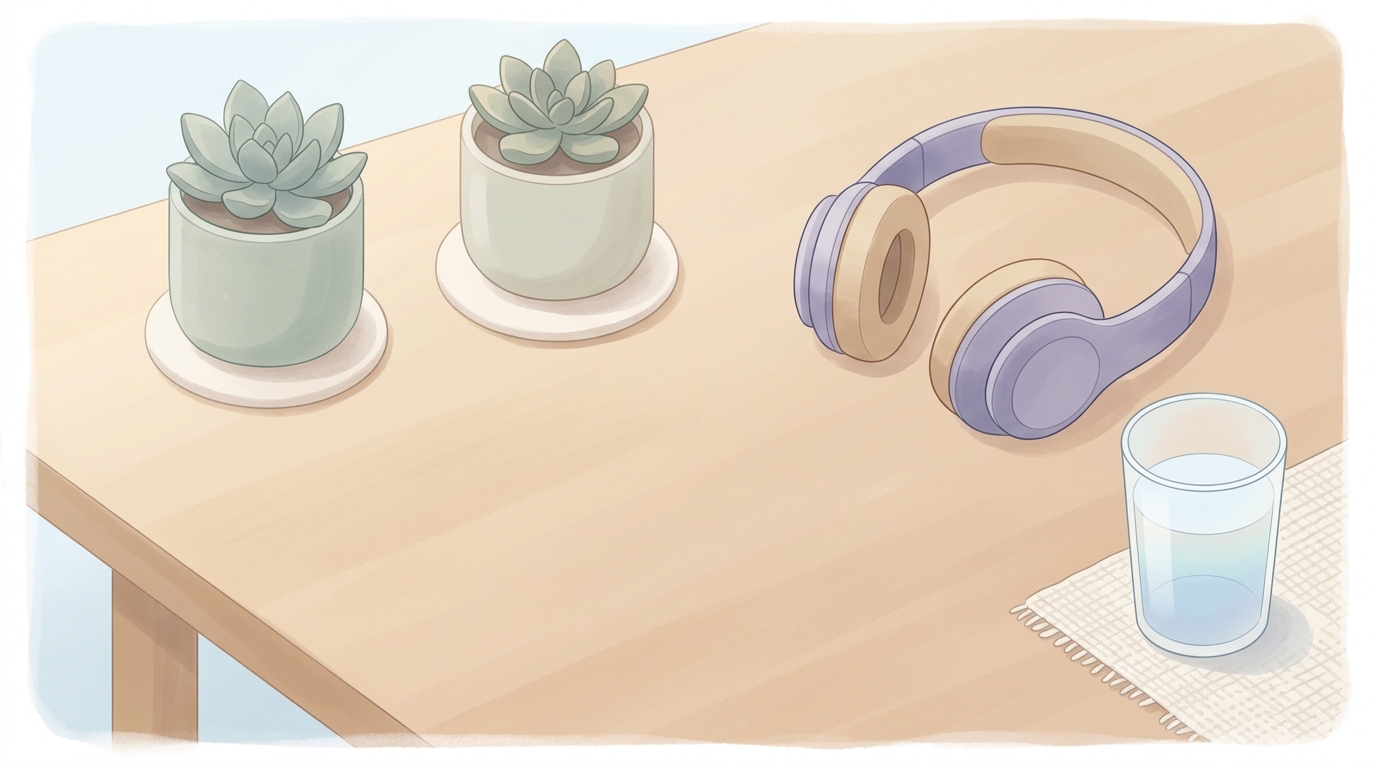
When you are in a slump, decision fatigue makes choices very hard. A dopamine menu solves this by organizing activities before you feel stuck.
You simply pick an option based on your current energy level:
- Appetizers: Micro-actions taking one to three minutes, like stretching or drinking water.
- Mains: Deeper resets taking fifteen minutes, like a calm walk around the block.
- Sides: Passive sensory support, such as playing lo-fi background music while working.
- Desserts: High-stimulation activities like video games that require a clear timer limit.
Having these options ready removes the friction of deciding what to do next. It allows you to refuel your nervous system without guilt.
Using Timers and Micro-Steps to Re-Engage

Stepping away for a break can feel risky if you worry about getting stuck there. Standard timers are easy for an exhausted brain to ignore.
Instead, try setting an unusual timer, like 13 minutes and 17 seconds. A strange time interval captures your attention better than a rounded number.
It creates a gentle boundary that helps your brain shift focus back to work. When the timer ends, enter your task with a Minimum Viable Action.
Commit to just one tiny step, like typing one sentence or opening one document. Small starts reduce task friction and build natural momentum over time.
Supporting Your Brain with Compassionate Systems
A brain slump is a signal that your system needs extra support and lower friction. It is not a sign that you need to punish yourself or work harder.
By building a supportive menu and using small steps, you honor your natural energy capacity.
You can move out of paralysis gently and set up systems that work with your brain.
Build a productivity system around your real capacity
If these strategies resonated with you, our comprehensive guide will give you a full toolkit to start, focus, reset, and recover on low-capacity days.