Why ADHD Brains Ignore Alarms (And How to Build Better Cues)
Published on September 18, 2026
Minimum Viable Action (MVA)
Replace jarring time alarms with visual tools, daily routine anchors, and small initial steps to ease task transitions.
Why Loud Alarms Keep Failing You
Do you set endless alarms on your phone? You might set one for 10:00 AM, 10:15 AM, and 10:30 AM.
At first, this system seems helpful. Soon, you swipe the alerts away without reading them.
Ignoring these alerts is not a personal failure. You do not lack discipline or effort.
Traditional alarms create an environment mismatch. They demand rapid task shifts without helping you bridge the gap.
Shift from Clock Times to Event Anchors

Your brain tracks time and events in different ways. Clock alarms rely on time-based memory.
Time-based memory asks your brain to constantly check the clock. This constant checking creates heavy mental effort.
Event-based memory works much better for ADHD brains. It connects a new task to something you already do.
Instead of an afternoon clock alarm, link your action to an existing routine. For example, take your pills right after you close your laptop screen.
Replace Jarring Sounds with Visual Warm-Ups
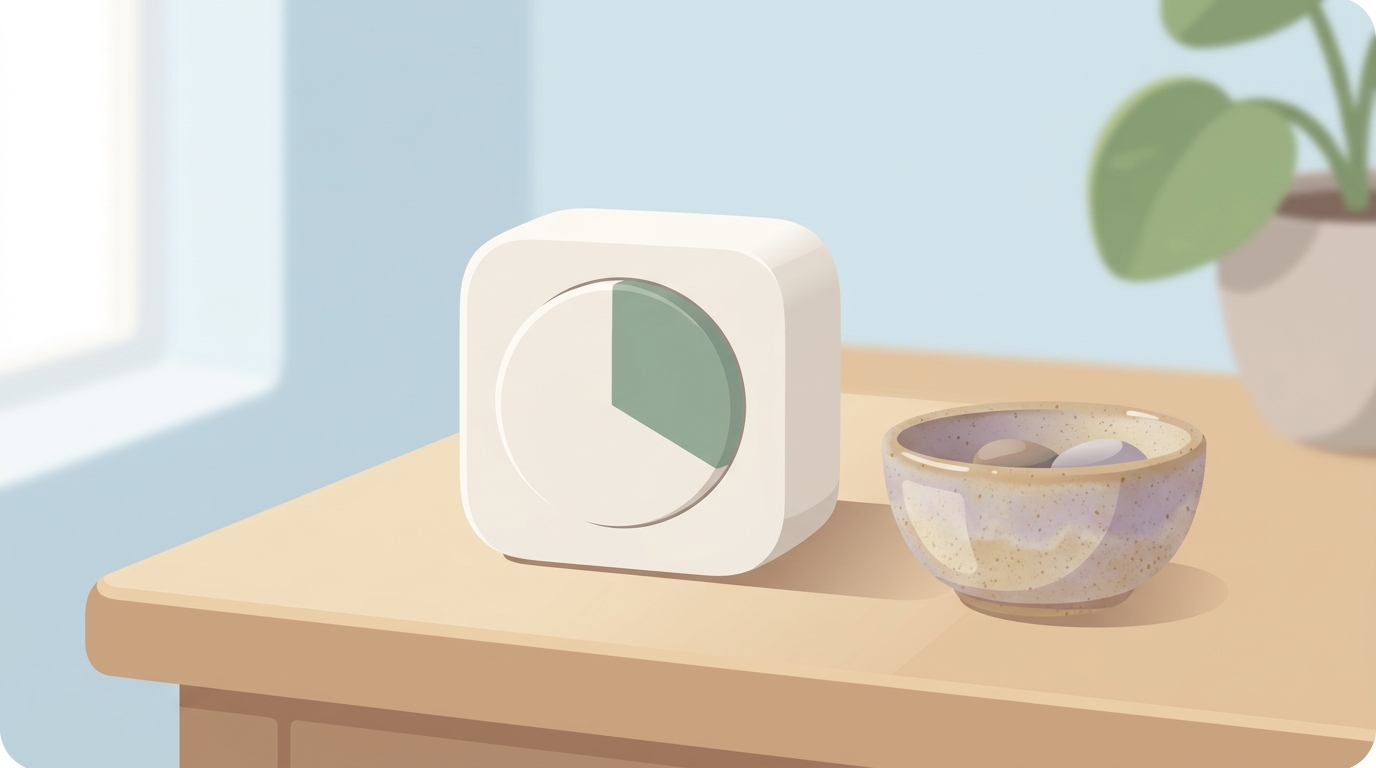
Loud, sudden alarms trigger a stress response. They shock your nervous system during deep focus.
This sharp noise often leads to quick irritation. You tap snooze just to stop the unpleasant sound.
A supportive environment uses quiet, visual warm-ups. Visual countdown timers show time passing gently.
You can also use smart bulbs that change brightness slowly. These gentle cues give your brain time to prepare for a transition.
Combine Your Cues with Tiny First Steps

An alarm reminds you to work, but it cannot plan the task. Vague tasks like clean the house cause instant mental overload.
Your brain gets stuck before you even begin. Pair every cue with a tiny physical action.
We call this a Minimum Viable Action. Make the first step as small as possible.
Instead of write report, your cue can say open document and type header. Small steps lower brain friction.
Building a System That Works with You
You do not need stronger discipline to manage your day. You need cues that fit how your brain works.
Start by picking one loud alarm to remove today. Anchor that task to an existing daily habit instead.
Use visual tools to make the passage of time calm and clear. Always keep your initial step small and simple.
When your environment supports you, getting unstuck becomes natural.
Build a productivity system around your real capacity
If these strategies resonated with you, our comprehensive guide will give you a full toolkit to start, focus, reset, and recover on low-capacity days.