Why You're Always 10 Minutes Late: How to Map Hidden Transition Time
Published on September 02, 2026
Minimum Viable Action (MVA)
Add explicit transition buffers and low-stimulus sensory anchors to help your brain switch tasks calmly.
Why Leaving the House Takes More Than Willpower
Do you always leave ten minutes late? You are not lazy or irresponsible. Your brain simply processes time differently.
Leaving the house is not one single step. It requires a complex mental shift. Your brain must disengage from one task before starting another.
We call this hidden phase transition time. When your environment ignores this phase, friction happens. Let us look at why this occurs.
The Hidden Cost of Switching Focus
Brain research shows timing is a core dimension of ADHD. Tracking internal time without a clock can be difficult. Estimating how long a routine step takes is hard too.
Switching tasks also taxes your attention. Moving from writing an email to walking outside changes your mental state. Your brain must re-orient to new visual cues and goals.
This shift creates cognitive lag. Your system is not failing. It just requires a clear buffer to adapt to new spaces.
Using Minimum Viable Actions to Break Momentum

Big transitions often cause executive freezing. Looking for keys, wallets, and shoes all at once creates high friction. You can lower this friction with tiny starting steps.
We call these steps Minimum Viable Actions. For example, put on your shoes before looking for your bag. Putting on shoes signals to your body that you are leaving.
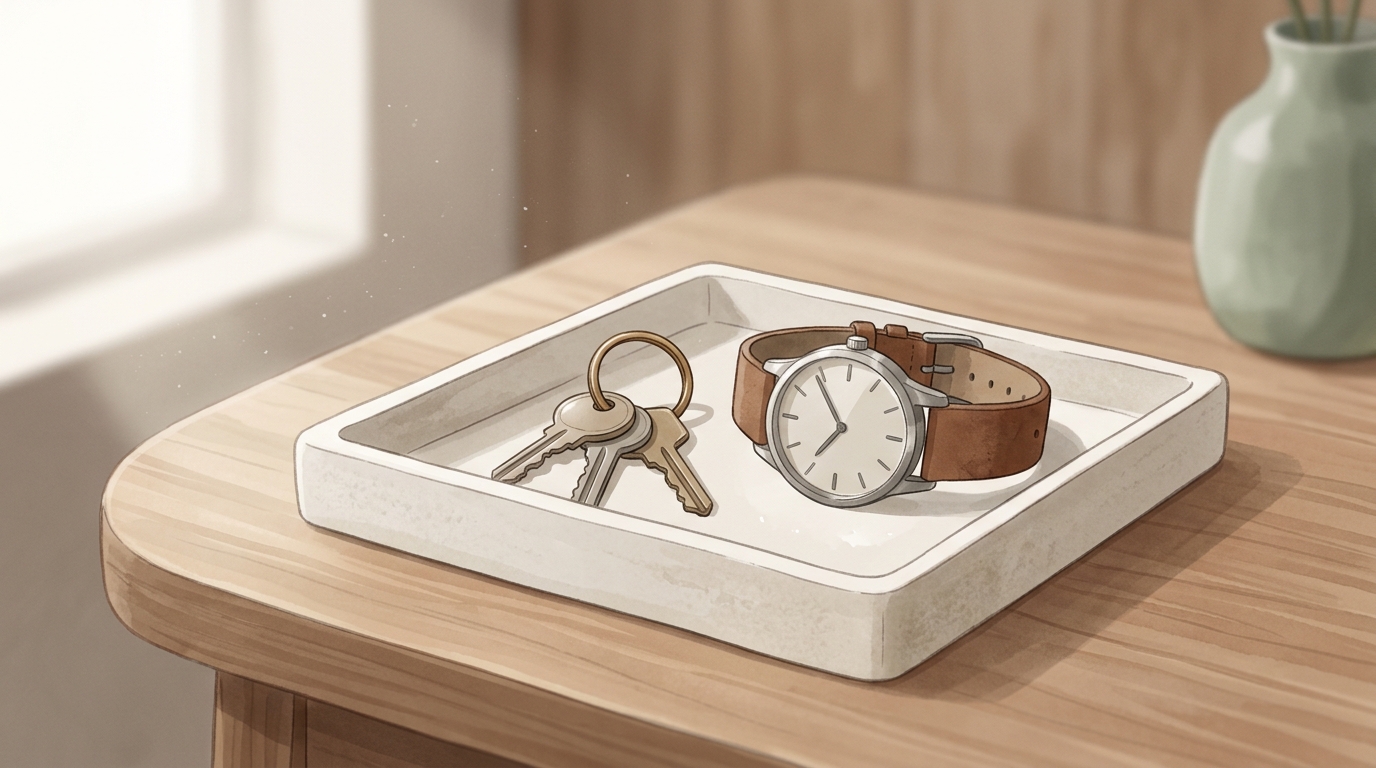
You can also create an entry launchpad. Keep your essential exit items in one designated spot. This removes the need to search your home while rushed.
Designing Two-Stage Bridges and Buffer Time

Loud, abrupt alarms can startle your nervous system. They force a sudden stop that feels jarring. Instead, use a soft two-stage audio bridge.
Set a gentle chime fifteen minutes before you need to leave. This alerts your brain to stop taking on new tasks. Set a visual cue five minutes before departure.
Track your delays without self-blame. If you leave late, treat it as diagnostic data. Adjust your setup to support your future self.
Moving Forward with Compassion and Design
Punctuality is not about effort or willpower. It is about building environments that fit your brain.
Map your real transition steps every day. Use sensory cues and extra buffer time. Small adjustments create a calmer, more predictable routine.
Build a productivity system around your real capacity
If these strategies resonated with you, our comprehensive guide will give you a full toolkit to start, focus, reset, and recover on low-capacity days.